Health Update - Month 13
Posted by Mira on April 2, 2026 in stories
This past month has been eventful.
I had my first bleeding episode after taking Doptelet for 13 months. Based on my analysis, several factors could have contributed to it. I will talk more about it in the ITP section. It was scary, but I learned a lot. To me, it was like a stress test (like in software engineering, where we do stress tests to see how a system behaves under heavy load). I came away with many learnings about my body and physiology in general.
I also did a couple of blood tests this month, including a CBC and a lipid panel. I will talk about the results in the following sections.
I also had a routine 6-month dental checkup and cleaning this month. It was better than before and better than I expected. It proves my teeth-cleaning routine is working.
Contents
- Lab Results
- Body Weight
- Gym Performance
- Diet
- Sleep
- Heart Rate (Resting Heart Rate & HRV)
- Menstrual Cycle
- Dental Hygiene
- Other Interesting Observation: Palms Not Swelling Anymore
- Autoimmune Update
- Learnings
- Next Steps
Lab Results
CBC
See the full platelet count history in Healing ITP: My Path to Understanding and Recovery, specifically for the dates 03/13/2026 and 03/23/2026.
Lipid Panel
| Metric | 10/01/2025 | 12/22/2025 | 03/13/2026 |
|---|---|---|---|
| Cycle Phase | Follicular | Follicular | Luteal |
| Total Cholesterol | 343 | 316 | 259 🔽 |
| LDL Cholesterol | 254 | 240 | 179 🔽 |
| HDL Cholesterol | 50 | 50 | 45 🔽 |
| Triglycerides | 193 | 132 | 185 🔼 |
| Trig/HDL Ratio | 3.96 | 2.64 | 4.11 🔼 |
Since I started adding more fiber (vegetables and fruits) back into my diet, my Total Cholesterol and LDL Cholesterol have been trending down, which is what I expected.
HDL Cholesterol is slightly down, but not by much. This is interesting because I expected HDL to increase with the strength training and cardio I’ve been doing. Still, it was a small drop, so I don’t want to read too much into it.
The biggest surprise has been my Triglycerides—they went up quite a bit. Since then, I’ve lost weight, and my understanding is that my body should be using energy more efficiently, yet Triglycerides rose again.
As I looked deeper, I realized that I took this test at the end of my cycle. Progesterone can increase Triglycerides, as it promotes fat storage and may temporarily reduce insulin sensitivity. Appetite and cravings for carbs may also increase, which can indirectly elevate Triglycerides if carb intake is higher.
With HDL down and Triglycerides up, my Trig/HDL Ratio increased.
This is my first time using Own Your Labs for blood tests. It is much cheaper than going through a doctor, where you need a reason for the visit and have to pay both for the consultation and the lab order. Own Your Labs is a platform that allows you to order your own lab tests without a doctor’s order. I ordered the tests online, printed the requisition form, and went to a Labcorp lab to get my blood drawn. Later, I learned that you don’t even need to print the form—simply emailing the requisition to the lab allows them to print it on the spot.
Body Weight
I lost quite a bit of weight in this month, due to following cycle-based fasting.
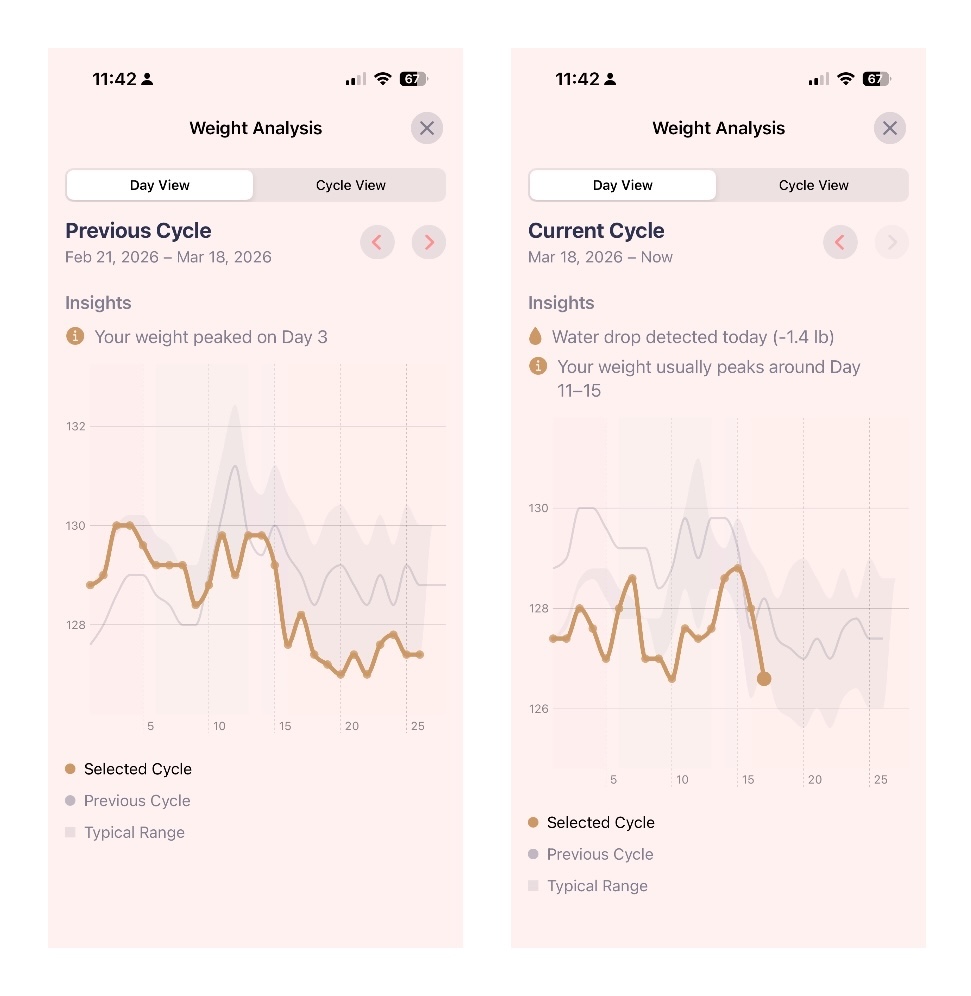
More and more, I realize the gym is not primarily for managing weight, but for building muscle and supporting heart health. The easiest way to manage weight is through diet and fasting.
Skipping a meal makes a big difference in my overall calorie intake and helps regulate my weight.
Gym Performance
My knees feel better after reduced workout intensity. This proves again my theory that my knee pain came from overtraining rather than autoimmune issues.
Diet
Previously, I tried eating breakfast before the gym on gym days and fasting on non-gym and lower-demand cycle days. This approach became too complex to manage. Since adopting a cycle-based fasting schedule, this is what is currently working for me:
Fasting structure
- 13-hour fast: Breakfast, lunch, dinner
- 15-hour fast: Light breakfast, lunch, dinner
- 17-hour fast: Lunch and dinner only
- No-fast days: Breakfast, lunch, dinner (eat until full)
Eating rules
- No snacking (this prevents extra calorie intake)
- Eat until full at dinner (this improves my sleep quality)
- Leave 2–3 hours between dinner and bedtime (this improves my sleep quality)
Now it’s clear: to make fasting effective, you still need to follow a routine meal schedule. When a scheduled meal time passes, skip it—don’t try to make up for it by overeating or consuming all the calories you missed. This is the true meaning of fasting.
Sleep
Before the bleeding episode, I had trouble sleeping and didn’t know why—likely part of strong PMS reactions. Now I think it was a signal that my body was crying for help.
Sleep continued to be poor after the heavy bleeding episode. I could fall asleep, but I woke up frequently during the night and didn’t get deep sleep. I took a week off from the gym after the bleeding episode. Sleep was shallow and filled with many dreams for a few days, but it gradually recovered. I set a goal for myself: I will not return to the gym until my sleep is fully restored. My body is trying to find equilibrium again.
It’s very interesting: poor health affects sleep, and poor sleep affects health. To break this cycle, you need to slow down and let your body recover.
Now I know what good sleep feels like: after a truly restful night, your limbs feel slightly numb when you wake up, as if they have just been repaired and restarted.
Heart Rate (Resting Heart Rate & HRV)
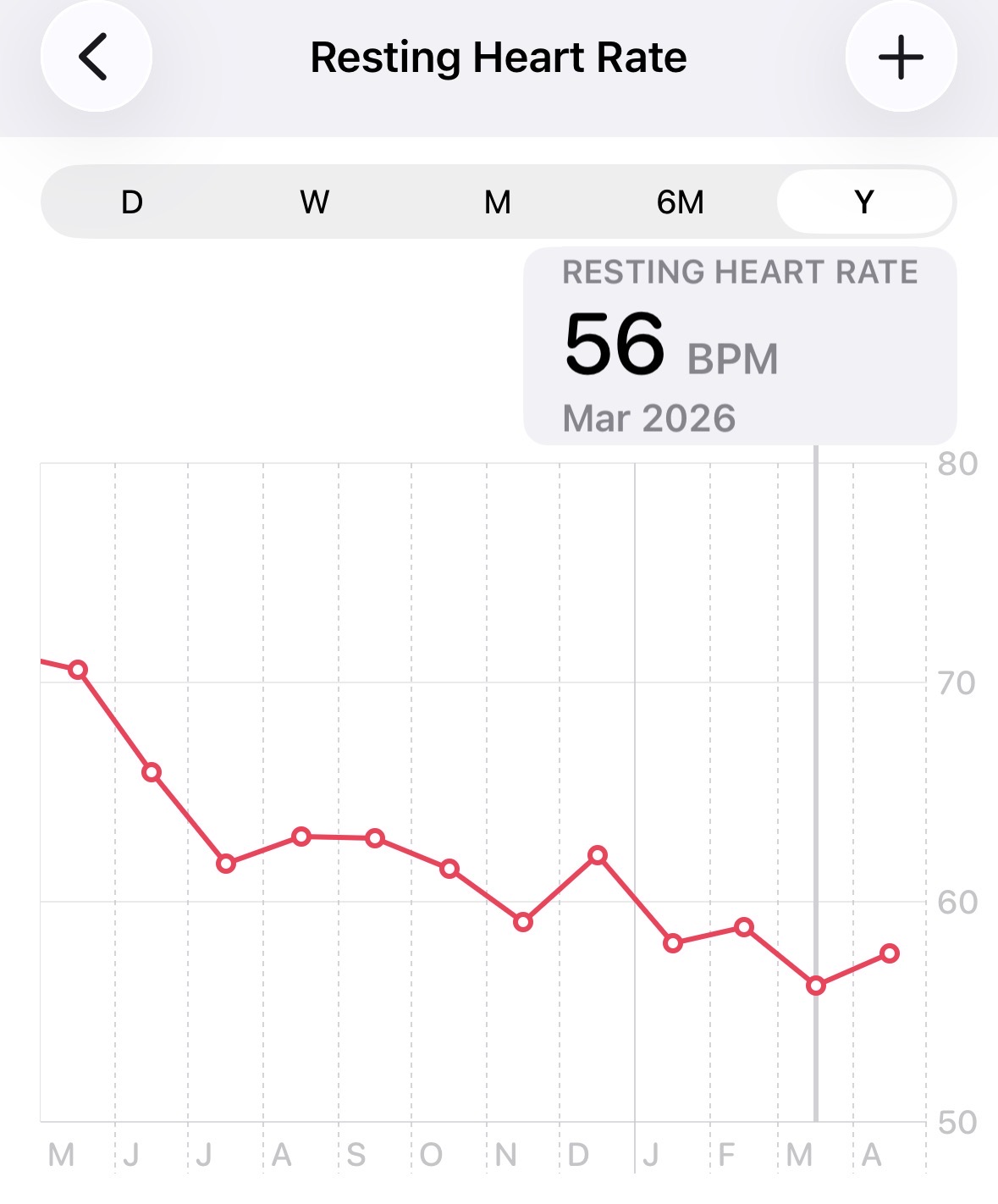
Resting heart rate continues to trend down. This may be due to improved cardiovascular health.
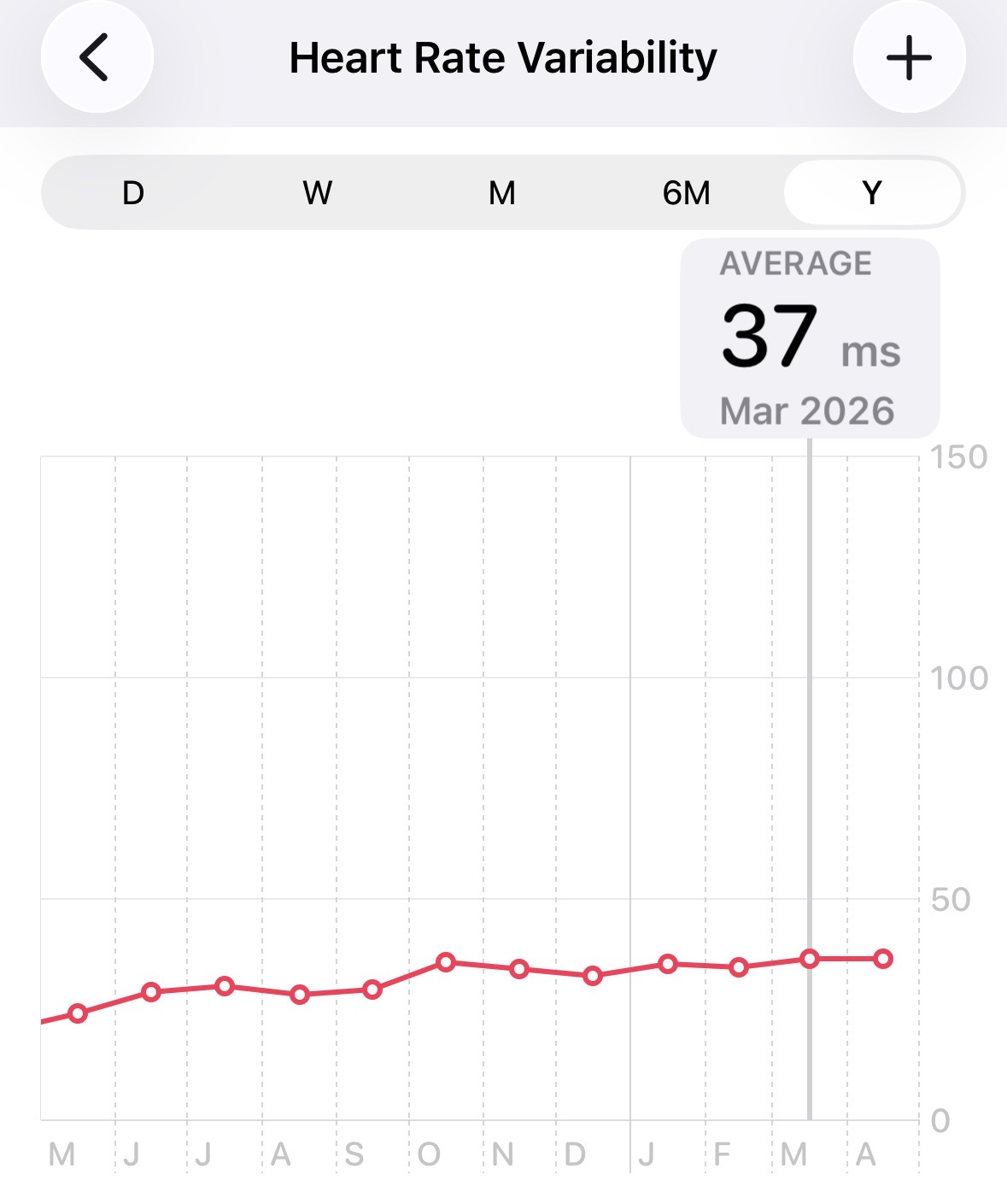
During the heavy bleeding episode, I was wondering how to measure stress levels. I found that HRV is a good indicator of stress. When stress is high, your heart beats faster even at rest, which lowers HRV. In other words, the lower the HRV, the higher the stress level.
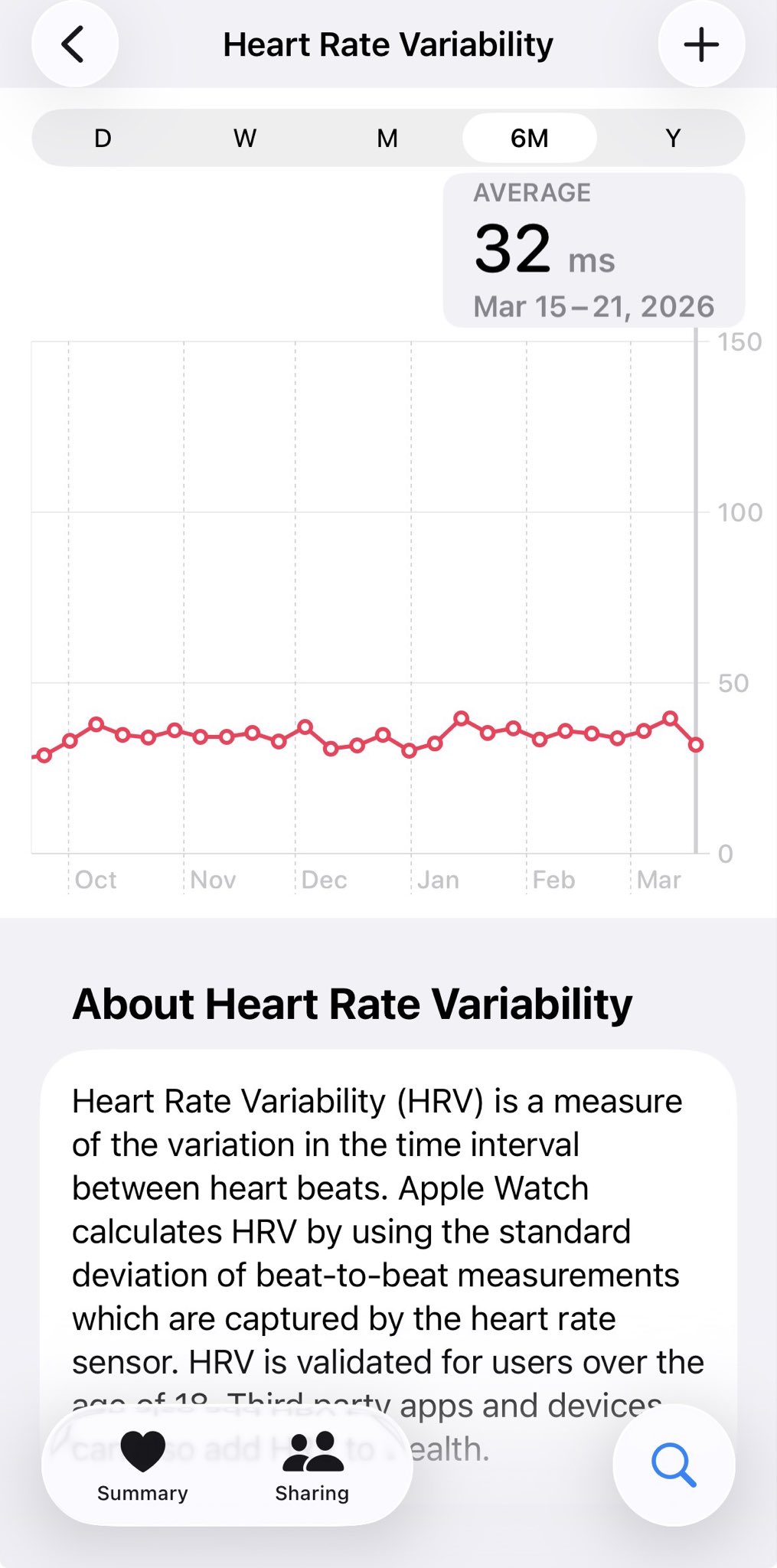
Overall, my HRV this month has been about the same, and even trending up.
However, during the bleeding episode, my HRV dropped significantly.
Menstrual Cycle
I had a heavy bleeding episode this month. It was scary, but it taught me many things. (See the ITP section for details.)
Dental Hygiene
I did a routine 6-month checkup and cleaning this month. All my teeth were rated 2s and 3s, which made me very relieved. It was huge progress compared to the last two visits, when I had to get deep cleanings.
The dentist did find heavy staining on my teeth and recommended rinsing my mouth and brushing lightly after drinking coffee.
My routine works:
- Morning and evening brushing thoroughly with an electric toothbrush
- Evening water flossing followed by thread flossing
- When thread flossing, aiming to go under both sides of each tooth, including the far back teeth
- Not using mouthwash (I believe mouthwash kills the good bacteria in my mouth)
- Not using fluoride toothpaste (I believe fluoride prevents iodine absorption)
I believe dental hygiene is very important for overall health. It is about balancing the bacteria in your mouth, which affects your gut health and overall well-being.
Other Interesting Observation: Palms Not Swelling Anymore
My palms used to swell after touching grass or plants, sometimes for a day or two. They would often become very red and itchy. I thought it was caused by substances released by the plants.
Recently, I sometimes forgot to wear gloves while gardening or pulling weeds, but to my surprise, my palms did not swell. After repeated tests, they consistently did not swell.
After more than a year of dietary changes, I think this improvement is a sign of better overall health. My palms not swelling anymore is likely a positive sign of reduced systemic inflammation and better immune tolerance.
Order of Body Fat Loss
Fat loss is a systemic process, not a targeted one. You cannot control which areas lean out first; instead, your body draws energy from fat stores across your entire system simultaneously.
Typical Female Fat Loss Trends: For many women, fat distribution follows a "gynoid" pattern (the classic pear shape). While every individual is different, the sequence typically follows this progression:
- Earlier Progress: Face, neck, arms, and upper torso.
- Longer-term Progress: Lower abdomen, hips, thighs, and buttocks.
This "top-down" lean-out is driven by hormonal and genetic patterns rather than a fixed checklist. If you see changes in your face and arms first, it’s a sign that the process is working exactly as biology intended.
Autoimmune Update
ITP: Scary bleeding episode
This section will get longer this month. I will describe the event, my analysis and learnings.
Event
Before Menstrual Period
I have been reducing Doptelet dosage in the last few months. There has been no bleeding episode during this time.
Leading up to my menstrual period, I felt extremely irritable and easily annoyed. My sleep was poor too. I tried to verbalize my feelings as much as possible to my family so I would not unintentionally take my frustration out on them.
I did a CBC, and my platelet count was 68k. The blood draw left a bruise on my right arm. I had not had a bruise for a long time.
During Menstrual Period
The first two days of bleeding were manageable. Then I did a pretty aggressive workout on the 3rd day, including cardio and weight training. I also ate Chinese steamed buns (with a flour wrapper) for the first time in a while for dinner on the 3rd day.
Early in the morning of the 4th day, I woke up and found my pad was soaked and that I was passing clots (bigger than a quarter) repeatedly.
I was initially a little scared, but with all the experience I’ve gained over the last year, I was able to calm myself down:
"All this past year, you’ve learned so much about physiology and how to navigate mental fears. This is the moment. You must not slide back into the extreme depression like a year ago. Keep your head up and praise the Lord!"
This helped lower the impact of stress on my platelets.
I took TXA immediately. While I was waiting for the TXA to work, I strolled in the backyard and listened to worship music.
The bleeding stopped within 2 hours after the first dose (650 mg × 2). The quick response reassured me that my platelet level was probably borderline but not crashing. (When I was in Brazil in 2024, I had to take TXA for many days before the bleeding stopped.) The heavy bleeding lasted about 6 hours in total. I took TXA three times during this episode.
Notes from 3/21/2026
- 4:00am – Blood all over, changed pad
- 7:00am – Blood all over, took TXA, changed pad
- 8:00am – Passed 2 large clots, changed pad
- 8:45am – Passed one 3 cm clot, changed pad
- 9:45am – Passed multiple clots, changed pad
- 12:00pm – Pad had only a small amount of dried blood
- 12:45pm – Took TXA
- 6:40pm – Took TXA
That day for lunch, we went for Texas BBQ and I ate half a pound of brisket to replenish my iron stores.
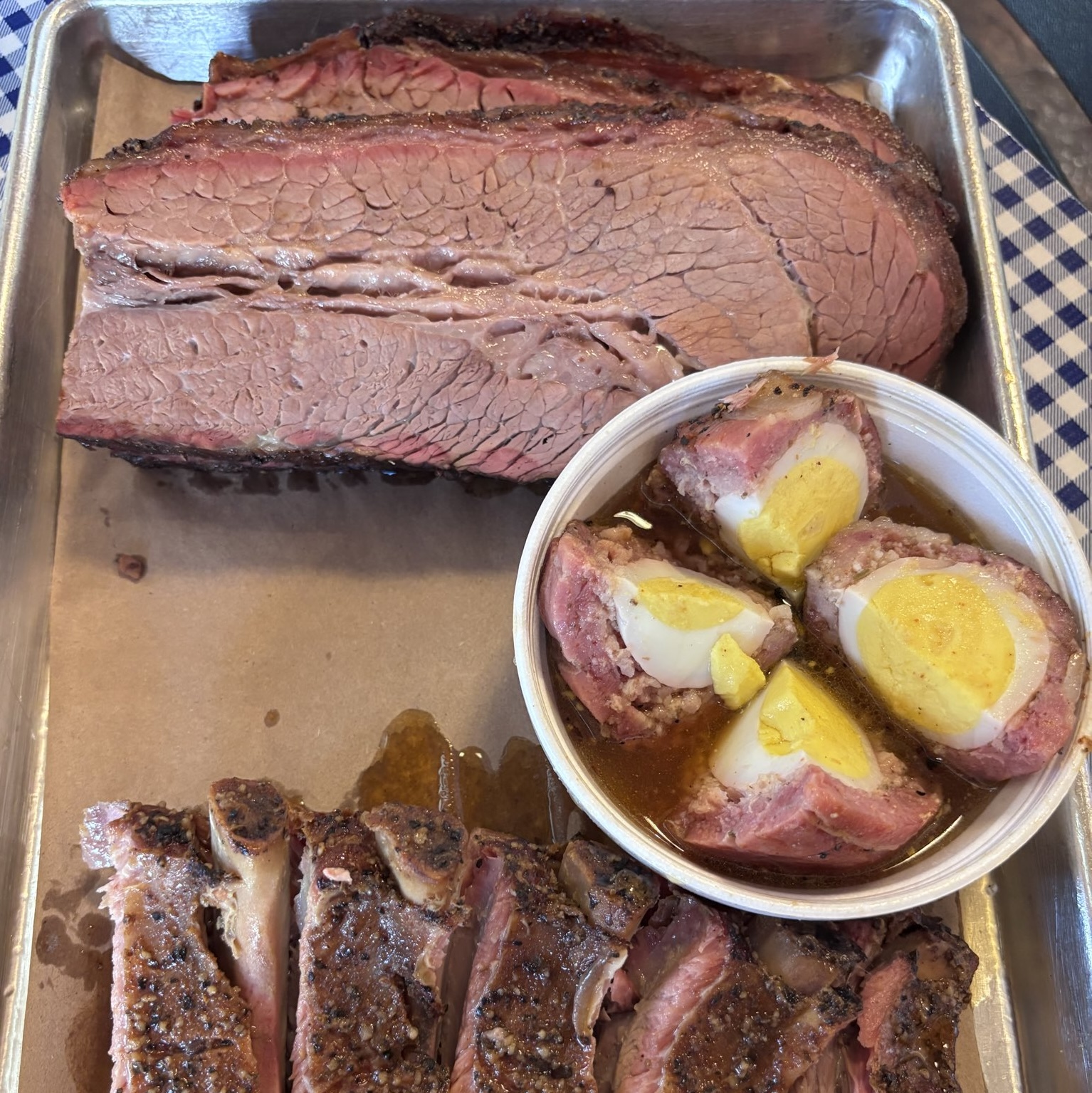
The menstrual bleeding became lighter and eventually finished within a few days. I also skipped the gym for a week.
Two days after the heavy bleeding episode, I did another CBC and my platelet count was 55k.
My sleep was still poor for a few days but gradually recovered.
After Menstrual Period
My sleep was restored. My mood started to get better too. I adjusted my workouts from four days to two days per week. I don’t intentionally count steps or active calories. I try to stay active throughout the day but aim for a sense of calm and balance while doing it.
Analysis
The possible triggers for this heavy bleeding episode could be:
- Borderline platelet level (68k)
- Workout stress (platelets needed for muscle repair)
- Menstrual bleeding (platelets needed for uterine lining repair)
- Eating gluten for the first time in a while the day before
The most likely triggers were workout stress and menstrual bleeding—a double whammy on my body. My limited platelet count may not have been sufficient to support both muscle recovery from an intense workout and menstrual bleeding at the same time.
Gluten is still an unproven factor. Although my platelet count seemed to drop after I ate gluten, those episodes were also accompanied by other stressors, so it is difficult to isolate gluten as the direct cause.
Learnings
This bleeding episode was scary, but it taught me many things:
- Limit workouts when my platelet levels are borderline and when I am close to my menstrual period.
- HRV reflects physical stress.
- Don’t chase numbers on trackers. Listen to your body and maintain equilibrium, which really means finding a sense of zen.
- You won’t lose muscle in a week.
- Letting your body rest is as important as working out.
- As your body recovers, your mood recovers too.
- Strong PMS reactions may be signaling that something is wrong in the body.
This episode also gave me an opportunity to apply what I’ve learned over the past year:
- Counting the frequency of changing pads as a metric to estimate the severity of bleeding.
- Using red meat to quickly replenish iron stores after blood loss.
- Staying calm during the heavy bleeding episode.
Next Step
My body is testing the platelet boundary right now. I will continue to hold the Doptelet dosage at the current level (40 mg every 9 days).
For the next menstrual period, I will avoid any heavy workouts and see whether I can get through it without heavy bleeding or needing TXA. This coming month is a test with a lot of information to gather.
Lupus: No Update
As Texas gets sunnier, I still walk outside—no photosensitivity so far, which is a win!
I believe Lupus and ITP share similar immune pathways. This is why many ITP patients are also diagnosed with Lupus. This does not necessarily mean they truly have both conditions. I do believe that as the body heals over time, the mechanisms behind both conditions can resolve.
Learnings
Why Recovery from ITP is Slow
As I was researching ITP, I came across some information about the physiological mechanisms behind ITP recovery. The following is how I put my understanding together in my own words:
Immune thrombocytopenia (ITP) is an autoimmune condition in which the body mistakenly attacks its own platelets. Even when the initial trigger, such as an infection or H. pylori bacteria, is removed, recovery is often gradual and can take months to years. This slow recovery reflects the complex ways the immune system and platelet production systems recalibrate.
One major reason is the persistence of antibody-producing B cells. Long-lived plasma cells can survive for months or even years, continuing to produce antibodies that target platelets. Similarly, memory B cells, which are designed to “remember” past threats, may mistakenly recognize platelets and gradually deactivate or die off over time.
This explains why medical treatments such as Rituximab can help some patients achieve remission for several years (though I did not use this treatment). Rituximab selectively depletes B cells, reducing autoantibody production and helping the immune system reset.
There is no safe way to directly speed B-cell die-off naturally, but supporting immune normalization can help the process progress more smoothly. This includes balanced sleep, stress management, gut health, and a nutrient-rich diet.
Recovery is further delayed because the immune system’s regulatory mechanisms need time to rebalance. Regulatory T cells (Tregs) act as brakes on autoimmune responses, but in ITP these brakes are often weakened. After the trigger is removed, Tregs gradually regain control, much like a thermostat slowly recalibrating to the correct temperature.
Additionally, platelet production in the bone marrow can be suppressed by inflammation. Even after the trigger is gone, bone marrow function improves slowly, taking months to restore efficient platelet production.
Finally, the immune system itself has inertia. Inflammatory signals and cytokines can remain elevated even after a trigger is gone, which is seen in other autoimmune diseases such as lupus, thyroiditis, and rheumatoid arthritis. Autoimmunity does not stop immediately; it de-escalates gradually, like a swing that continues moving after you stop pushing it.
Taken together, these factors explain why ITP recovery is slow. Even after removing the trigger, the persistence of antibody-producing cells, the gradual rebalancing of regulatory immune cells, and the slow restoration of platelet production mean that normalization of platelet counts often takes 6–24 months.
Hormonal Effects on Lipids Across the Menstrual Cycle
As I tried to understand why my triglycerides went up in the latest blood test, I found that, during the menstrual cycle, hormones can influence triglyceride levels:
Follicular Phase (Days 1–14, menstruation to ovulation): Estrogen rises, which generally lowers triglycerides and slightly improves cholesterol—LDL may go down a little, and HDL may go up.
Luteal Phase (Days 15–28, after ovulation until next period): Progesterone rises, which can increase triglycerides by promoting fat storage and reducing insulin sensitivity. Appetite, especially for carbs, often goes up, which can further raise triglycerides.
Patterns:
- Triglycerides are usually lowest around ovulation.
- They tend to rise in the late luteal phase, just before menstruation.
- Fluctuations can range roughly 10–30%, and sometimes more if diet or metabolism plays a role.
This means, in order for women to get the most accurate lipid panel, we should aim to get the blood test done around ovulation.
Next Steps
- [New] Have meals fit into the fasting schedule
- [New] Reduce strength training to 2x/week from 4x/week
- [New] Focus on body comfort over stats
- [New] Avoid stressful workouts before and during my period
- [New] Rinse the mouth after coffee and brush lightly, to prevent staining
- [New] Get blood test done around ovulation to get the most accurate lipid panel
- Strength training focus on pliability and flexibility
- Increase fiber to feel full
- Keep Doptelet at 40 mg every 9 days (20 mg for 4 days, then 20 mg for 5 days)
- Keep pork intake low; focus on beef, fish, lamb, and eggs
- Eat clean, sleep well, and get regular sun exposure
- Monitor low heart rate and HRV
- Continue eating complex carbs, vegetables, fruits, and nuts
- Continue avoiding gluten for now (!!!) until platelet count is back to normal range
- Continue using organic cloth menstrual pads
- Continue avoiding screens while eating