Health Update - Month 10
Posted by Mira on January 5, 2026 in health updates• 9 min read
This past month was the holiday season. I’m proud of not overeating or eating things I shouldn't have.
At the end of the month, we took a trip to Bogotá, Colombia, spending six days in the city and one day in the mountains. During the trip, I caught a cold—identified by Perplexity as a rhinovirus, which was common in the city at the time—and had a low-grade fever (37.4°C) along with some body aches. Some of the data below reflects the impact of this virus.
This month, I requested another routine health checkup with my PCP. I plan to reduce the frequency of testing in 2026, and I will explain why later in this post.
Contents
- Year-end Health Checkup
- Body Weight
- Gym Performance
- Sleep
- Resting Heart Rate
- Menstrual Cycle
- Other Learnings
- Perspectives
- Autoimmune Update
- Next Steps
Year-end Health Checkup
On December 22, I completed another round of routine blood tests. The results were mixed—some stayed the same, while others improved—but I feel better and stronger overall, especially in terms of gym performance, energy levels, and joint pain.
Lipids
- Total Cholesterol: 316 mg/dL (down from 343 mg/dL 10/1/2025) ✅
- LDL Cholesterol: 240 mg/dL (down from 254 mg/dL 10/1/2025) ✅
- HDL Cholesterol: 50 mg/dL (same as 10/1/2025) ✅
- Triglycerides: 132 mg/dL (down from 193 mg/dL 10/1/2025) ✅✅✅
- Triglycerides/HDL ratio: 2.64 (down from 3.96 10/1/2025) ✅✅✅
Since my last round of tests, I have added more complex carbs, vegetables, and fruits to my diet, and my lipid profile clearly reflects these changes.
The most significant improvement is the drop in triglycerides. As a result, my Triglycerides/HDL ratio is moving closer to the optimal range (< 2). While LDL cholesterol also decreased, it remains quite high.
Research suggests that triglycerides respond fastest to behavioral changes (diet and exercise)—often within days—while LDL and HDL can take months to shift significantly.
At this point, I'm still not convinced that high LDL is bad.
Metabolic Markers
- Fasting Glucose: 85 mg/dL (about the same as 84 mg/dL 10/1/2025) ✅
Fasting glucose remains stable despite the addition of complex carbs and fruits.
Full Blood Count
- Platelet count: 74k (down from 95k 12/5/2025) ❌
- WBC: 2.9 (down from 4.2 12/5/2025) ❌
Autoimmune Markers
- Complement C3: 65 (same as 11/20/2025) ❌
- Complement C4: 11 (down from 12 11/20/2025, still in normal range) ✅
- C-reactive protein: <0.3 (same as 10/1/2025) ✅
- Erythrocyte sedimentation rate (ESR): 16 (down from 21 11/20/2025, 20 10/1/2025) ✅✅✅
The most notable improvement is in ESR (an inflammation marker), which is now within the normal range. A year ago, it was over 30. This confirms that my diet and lifestyle choices are driving positive changes in my body. It is incredibly encouraging to see these results through lifestyle alone, without medication like HCQ (which I stopped taking in June 2025).
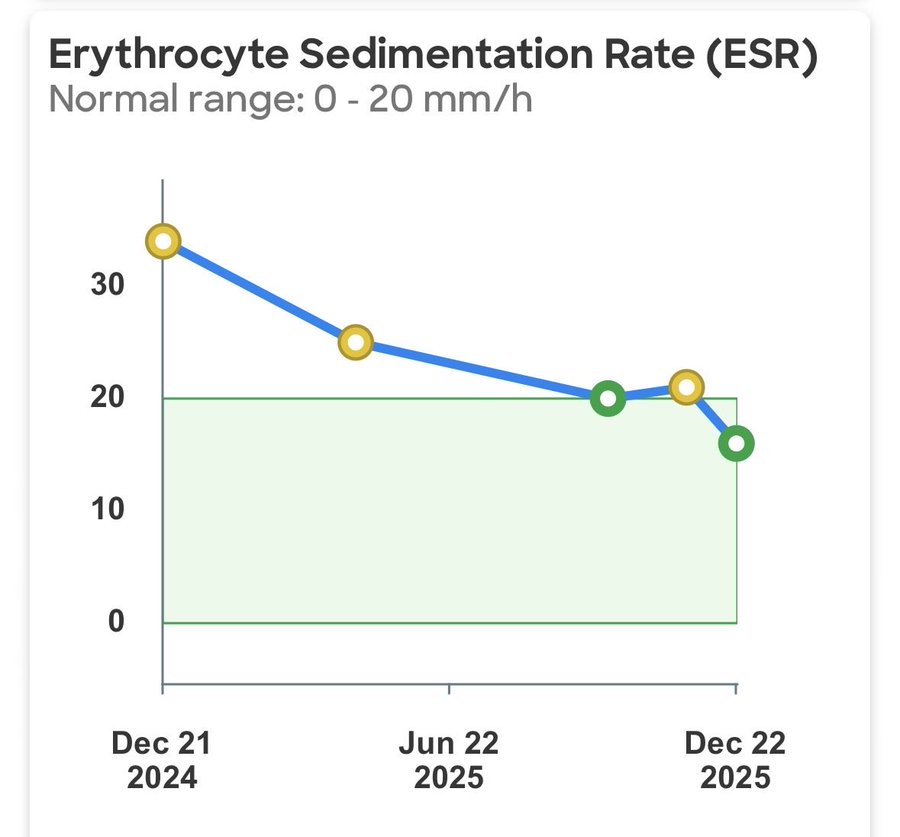 ESR over the months
Research indicates that when recovering, ESR is often the first to respond. Markers like dsDNA and C3/C4 complements can take months to shift, and platelet counts are often the last to move. This helps set realistic expectations for my progress.
Summary
In my opinion, these are excellent results. I believe I am on the right path.
Summarizing what I did to get to this point:
- Resistance training and cardio 4x/week
- Daily walks of >10k steps
- Eating only at meal times, no snacking
- Sleeping well
- Daily sunlight
- Lean meat, veggies, fruits, dairy, nuts; no junk
I believe the primary drivers for lowering my triglycerides were the shift from a high-fat to a lower-fat intake and the introduction of complex carbs. This reduces excess energy in circulation, naturally bringing the levels down.
Body Weight
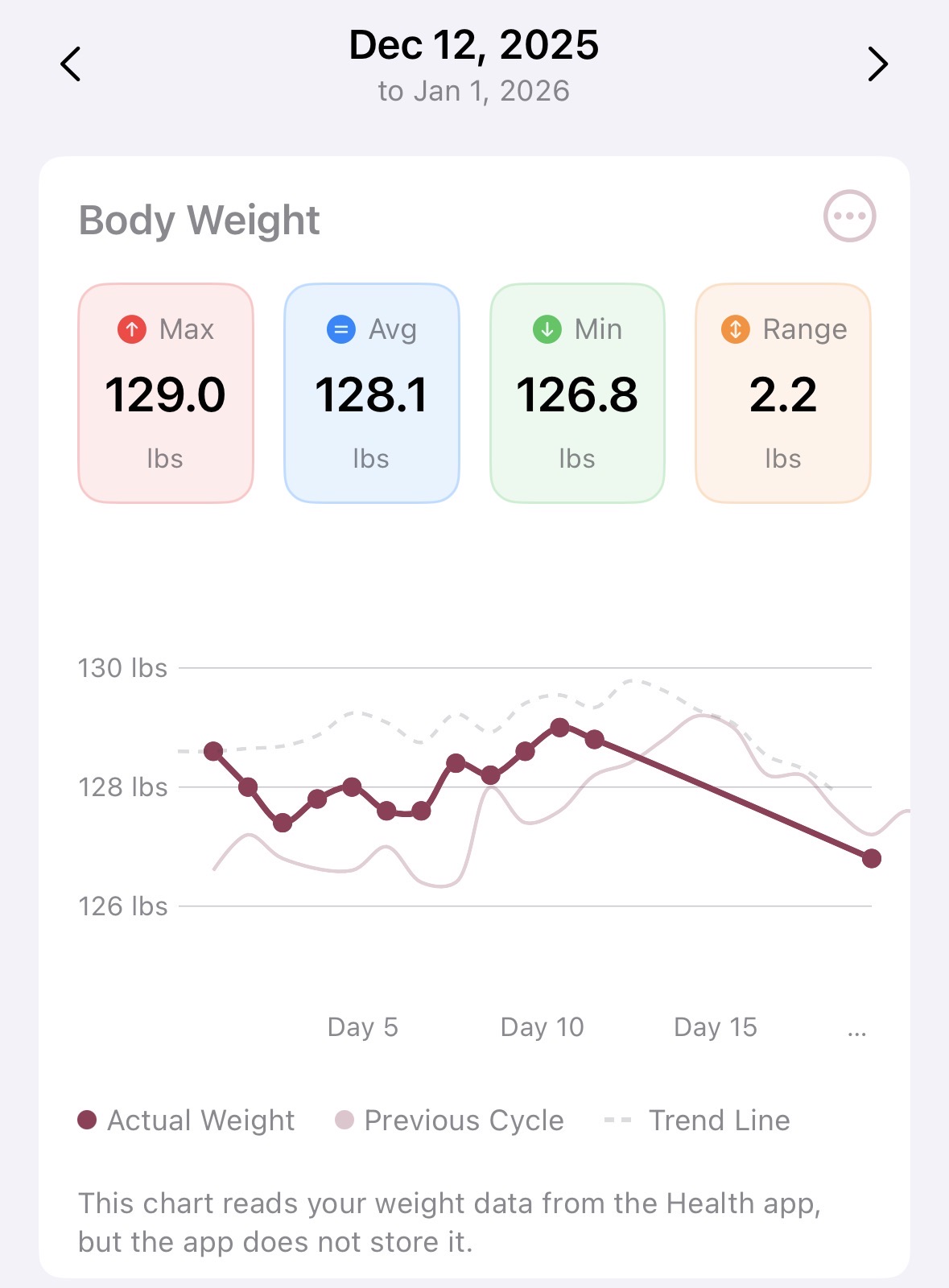 Body weight in the recent cycle
Gym Performance
My gym performance has been good. I was able to do one half pull-up. As I work toward my goal of completing a full pull-up, this progress is very encouraging.
However, I noticed that I became easily exhausted in the evening. I wonder if it was due to the intensity of the workouts or not consuming enough food to recover.
During my trip to Bogotá, I didn't work out, and those evenings were not as exhausting. This makes me suspect the exhaustion is tied to workout intensity. I plan to test a few things:
- Eat before and after workouts.
- Reduce workout intensity.
Sleep
Sleep has been stable at 8 hours or more per night.
During our night in the Colombian mountains, we all slept for 10 hours. I think it was due to the natural environment—a complete absence of noise, combined with deep darkness and tranquility. With only the sounds of birds chirping and insects buzzing, it was absolutely the best place to sleep.
Falling asleep is not something we can fully control; it is, in a sense, a gift. My daughter recently asked me how to fall asleep, and I told her: just let your thoughts flow without trying to control them, and stop asking yourself if you’re still awake.
Resting Heart Rate
My resting heart rate remained stable until I contracted the virus.
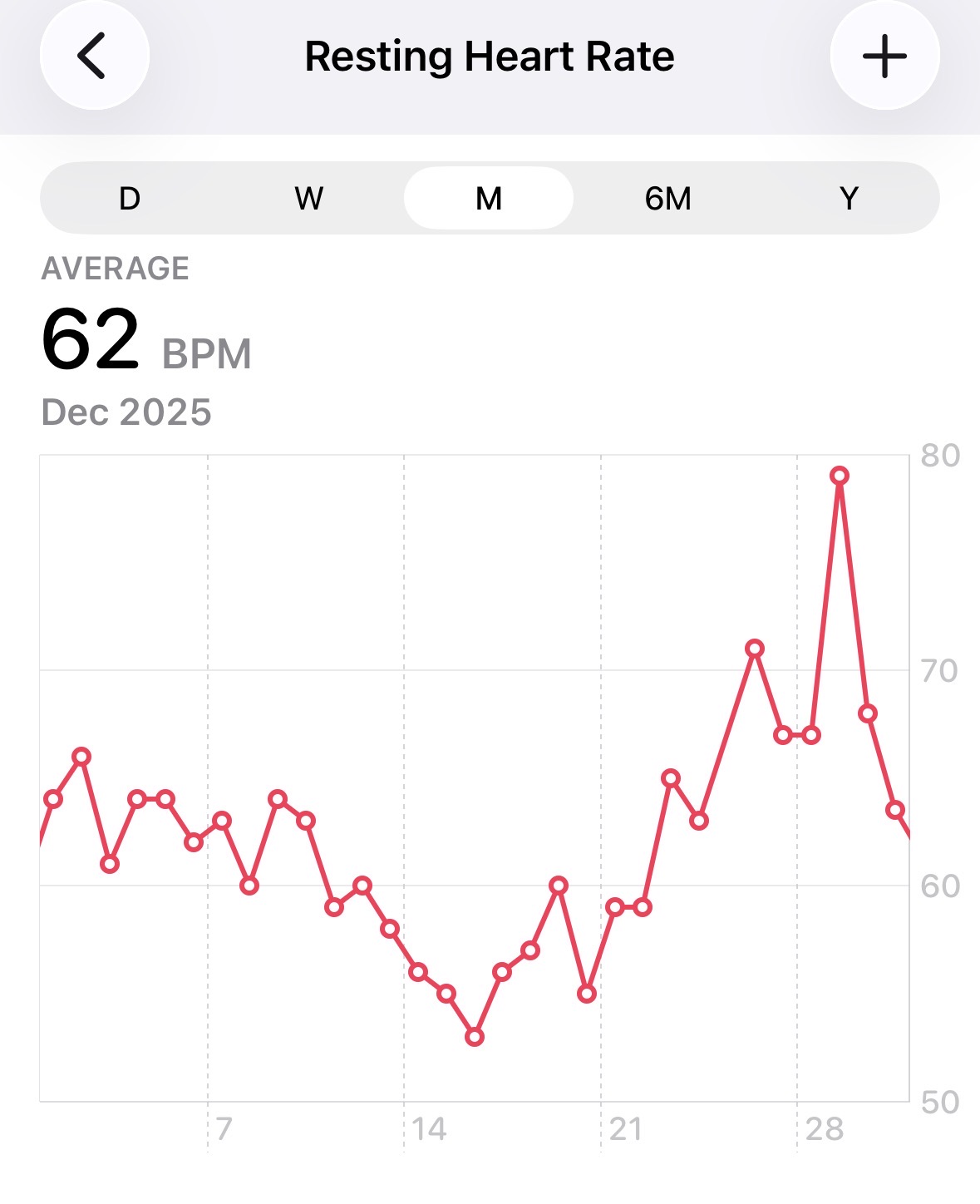 Resting Heart Rate this month. I caught a cold toward the end of the month, which elevated my heart rate.
I recently noticed that my heart rate is lower when I lie down with my legs straight compared to when they are elevated.
Menstrual Cycle
My menstrual cycle was manageable this month, which indicates that my platelet count remained within a safe range.
Other Learnings
Huberman Lab with Dr. Justin Sonnenburg: The Microbiome
I learned that emulsifiers in processed foods can break down the gut’s mucus layer—something I had always suspected.
Another insight: microbes in nature are often less harmful than the chemicals, pesticides, and microbes found in industrial environments.
It was also interesting to learn that studies show immigrants to the US often lose microbiome diversity shortly after arriving, and it is difficult to recover. How ironic that the "land of opportunity" can be so challenging for our health.
WBC Fluctuations
The time of day significantly affects white blood cell (WBC) levels: they are typically lower in the morning and higher in the afternoon. This explains why my WBC count appeared high (5.5) in a test last summer; that sample was taken around 3 PM in the Bay Area, whereas my other tests are usually performed in the morning.
Huberman Lab with Dr Roger Seheult: Natural Ways To Fight Fever
I learned that natural ways to fight fever basically involve raising the body temperature so the body can release cytokines that fight infection:
- Take a warm bath
- Go outside in the sun
I tried giving my daughter warm baths when she had a fever, and her temperature returned to normal the next day.
Schwarzenegger's Take on Muscle
“Muscles are torn in the gym, fed in the kitchen, and built in bed.”
Perspectives
Surrendering Control
God gave us a mind we can direct, but He also gave us a body that is incredibly complex, sophisticated, and autonomous. While we can influence it through diet and lifestyle, it remains a system of its own. Realizing the awesome complexity of the body’s design is humbling.
The bodies we inhabit are borrowed; they never truly belong to us. We receive them at birth and return them at death. While we may never fully understand how they work, it is our responsibility to care for them.
Moving Away from Frequent Testing
I did many blood draws in 2025 and learned a lot, but I also see the limitations of excessive testing:
- Lab results can be imprecise.
- Interpretations can be flawed.
- We may not have the right markers for the conditions we are trying to measure.
The body is an immensely complex system, and no single marker tells the whole story. I have reached a point where I want to rely on fewer blood tests and trust my body more.
Ultimately, I have one indicator that is more telling than any lab result: how I feel. My subjective well-being has mirrored the key blood markers I've been monitoring, so I've decided to test less frequently in 2026: a CBC every quarter to adjust my Doptelet dosage, and a full panel at my yearly checkup.
Autoimmune Update
ITP: Platelet Count dropped to 74k
I reduced my Doptelet dosage to 40 mg every seven days, so I expected my platelet count to drop slightly. However, it fell to 74k—a more significant drop than anticipated. Since I was also fighting a virus, I suspect this 20k drop resulted from the combination of illness and the medication reduction.
My menstrual cycle has been manageable this month, which is a good sign. I will continue to monitor it, and as long as it remains stable, I don't plan to have another CBC test until March 2026.
Lupus: Stable blood markers with improving joint pain
In the latest test, lupus markers (C3, C4, and dsDNA) remained consistent with previous results, but ESR has decreased dramatically. This aligns with the improvement I've felt in my joint pain.
While in Bogotá, the UV index was occasionally high during the day, yet I didn't experience any photosensitivity. This is a very positive sign.
Next Steps
- Continue my Doptelet dosage at 40 mg every 7 days.
- Continue strength training, focusing on pliability and flexibility.
- Keep pork intake low; focus on beef, fish, lamb, and eggs.
- Eat clean, sleep well, and get regular sun exposure.
- Manage low heart rate.
- Continue with complex carbs, vegetables, fruits, and nuts.
- Avoid gluten for now.
- [New] Less frequent blood tests (every 3 months, next in March 2026).
- [New] Adjust workout intensity by listening to my body.